One of the more useful changes we have recently made to A9X Scripting is simple:
script results can now be emailed back to you after the script has run on the vessel.
That may sound like a small convenience feature.
In maritime IT, it is more than that.
It reinforces an important design choice that has been in A9X Scripting from the start:
this is not a tool built around the assumption that every vessel and every PC is always online.
Maritime scripting has a different operating model
Many remote management tools were designed with office-style assumptions in mind.
They expect:
- stable connectivity
- always-on devices
- immediate execution
- immediate return of results
That is not how maritime environments behave.
On vessels, a target PC may be powered off. The vessel may be offline. The satellite link may be unstable. Or the system may simply not be in a good state to respond right now.
That does not mean the scripting job has failed. It means the environment is behaving like a vessel.
A9X Scripting is built for store-and-forward operation
With A9X Scripting, scripts are sent down to the target environment and run when the target PC is available.
The result is then returned when the vessel is online again.
That is a store-and-forward model.
Instead of assuming that the full round trip must happen live in one session, A9X allows the job to move through the environment in a way that matches offshore reality.
This is especially useful when you need to:
- run quick diagnostics
- pull a configuration value
- check security state
- inspect Windows Update behaviour
- gather evidence before deciding on a next step
The operator does not need the vessel to be continuously connected at the moment the script is sent.
The results were already in the portal
This is worth being clear about.
The results were already available in the portal.
That part has not changed.
The change is that the results can now also be emailed back to you once they are returned.
That matters because in maritime operations there can be a gap between:
- sending the script
- the PC running it
- the vessel coming online again
- the operator seeing the returned output
Email helps close that gap.
It means you do not have to keep checking back manually to see whether the result has appeared yet.
This is useful because vessels are not always online
That sounds obvious, but it has real consequences for tool design.
If a vessel is offline for a period, or if a PC only comes online intermittently, an offshore-safe scripting model needs to tolerate delay without turning that delay into confusion.
That is where store-and-forward scripting becomes powerful.
The workflow becomes:
- dispatch the script
- let the target run it when possible
- receive the result when connectivity returns
That is a much better fit for maritime operations than pretending every support action can be fully interactive.
The portal still gives the operational view
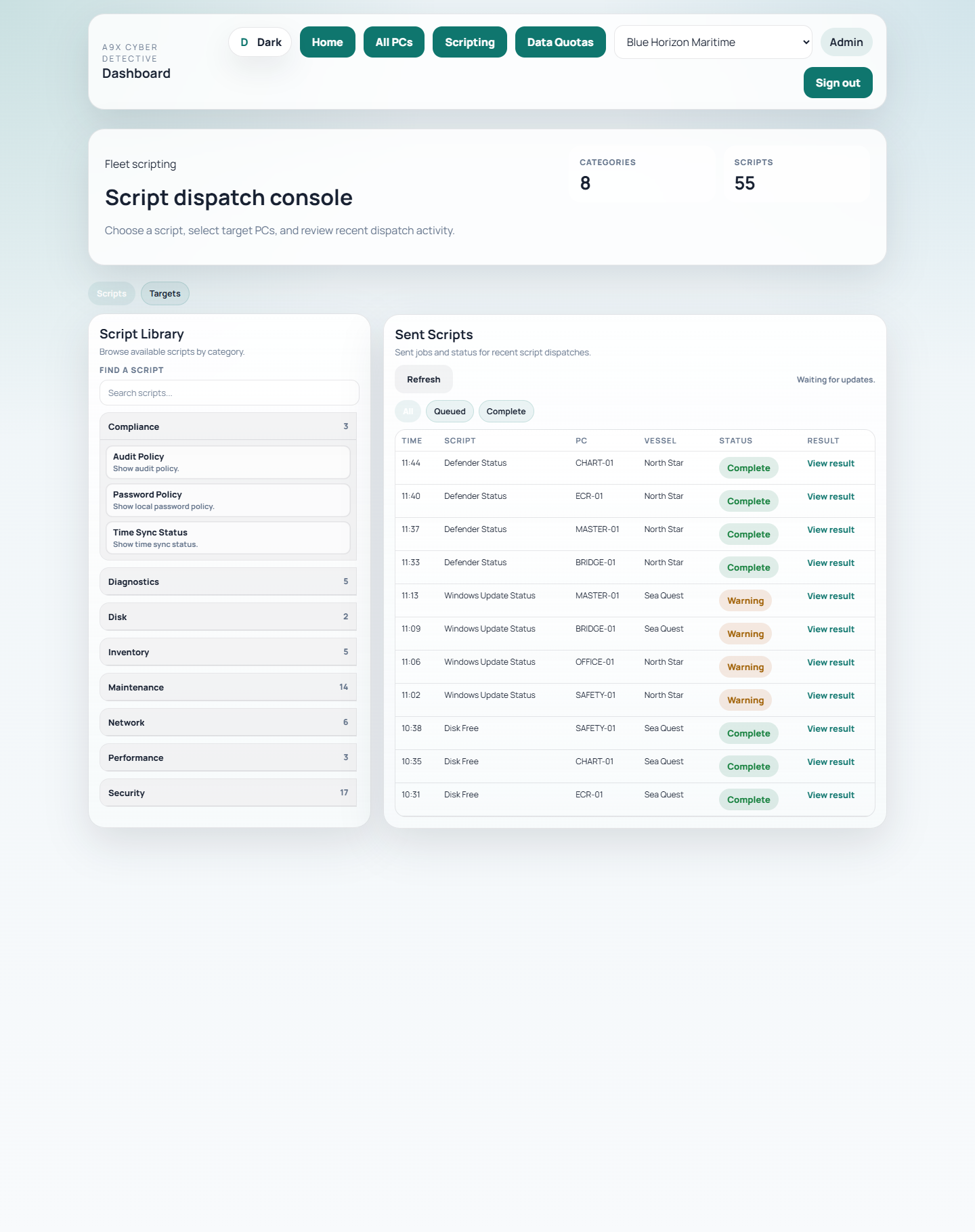
The scripting console remains the main operational workspace.
It lets teams:
- select from a library of scripts
- choose target PCs
- see what has been sent
- review status
- open the returned result in the portal
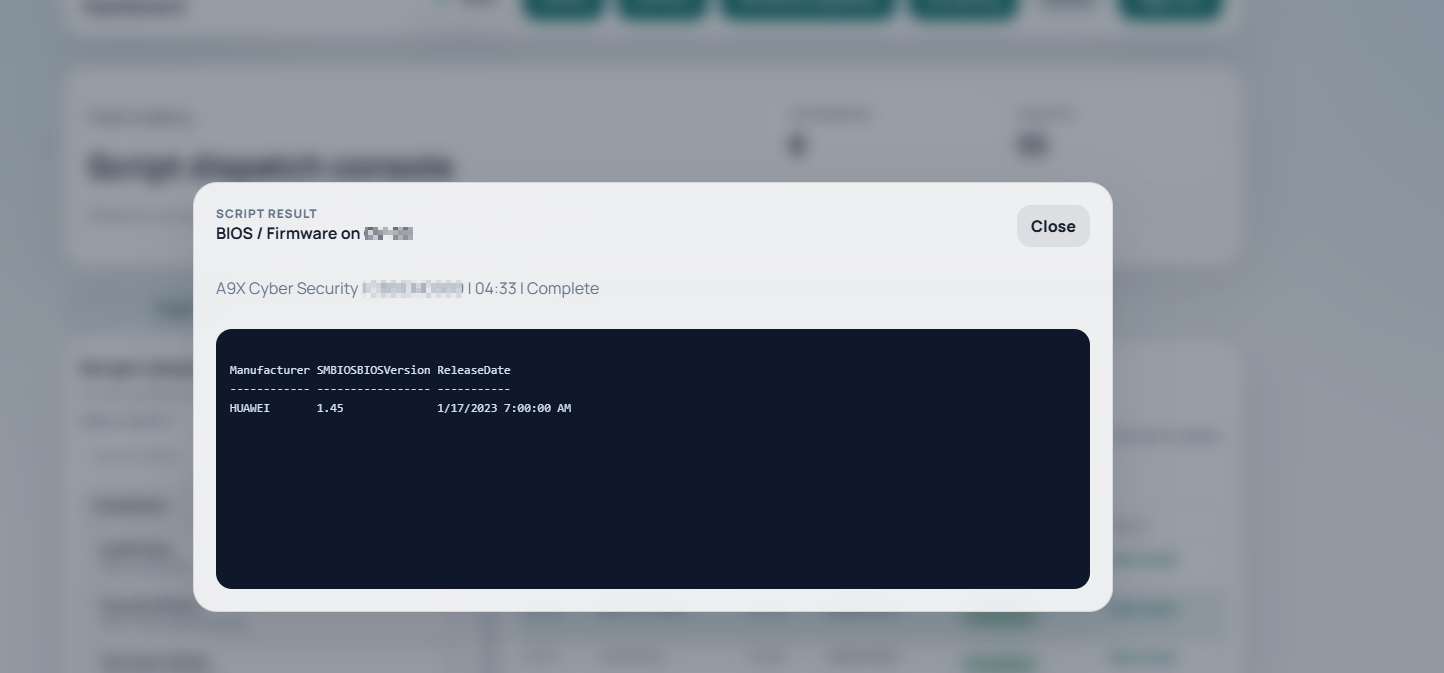
Returned output can still be reviewed directly inside the portal result view.
Email makes delayed results easier to operationalise
The new email path does not replace the portal.
It complements it.
Once a result comes back, the operator can receive a message showing:
- the script task id
- the script id
- the fleet
- the site or vessel
- the computer
- the returned status
- the output itself
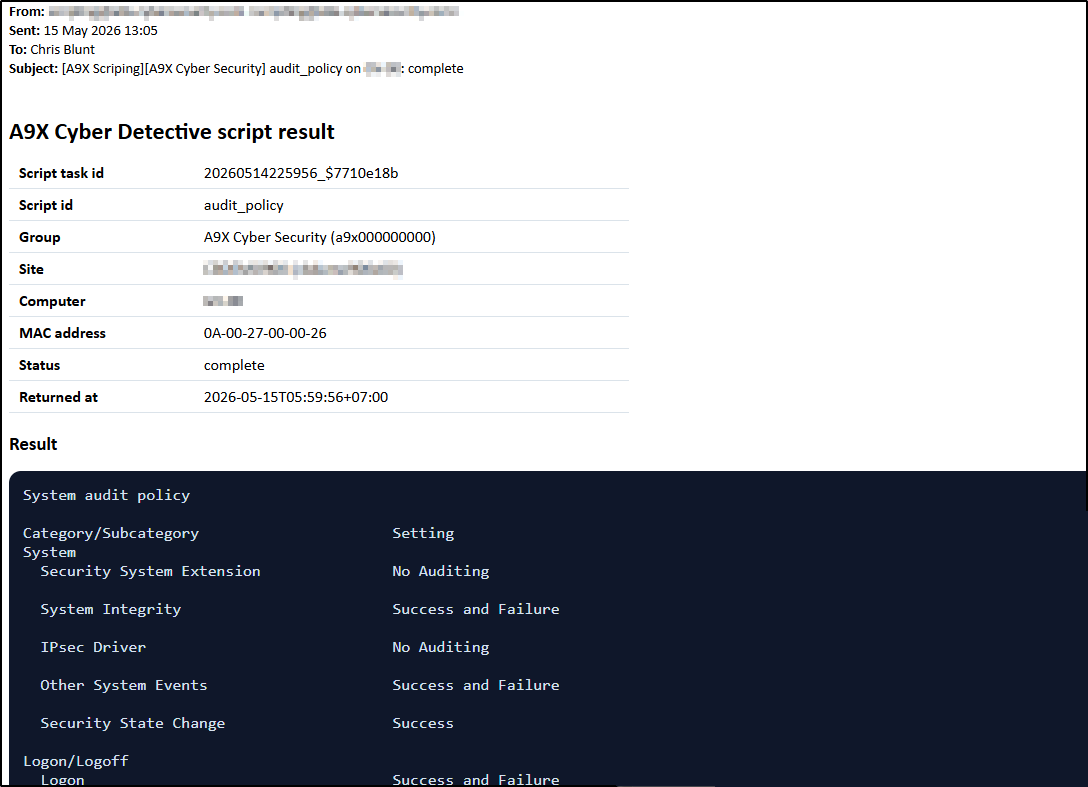
For teams dealing with intermittent connectivity, that is valuable.
The result can arrive when the vessel is ready, rather than only when the operator happens to be watching the portal.
This is different from a typical RMM mindset
A lot of tooling in the market still leans toward a live-session mindset.
That works well enough when endpoints are permanently reachable.
But maritime support often needs a more tolerant model:
- send now
- execute later
- return later
- still keep the workflow usable
That is what makes store-and-forward scripting powerful offshore.
It accepts the communication pattern instead of fighting it.
Bottom line
A9X Scripting was designed for the reality that vessel PCs are not always online and that results do not always come back immediately.
The portal already gave teams a place to view returned output.
Now the addition of emailed results makes that delayed-return workflow easier to use in day-to-day operations.
For maritime IT teams, that matters because good remote tooling offshore is not just about live control.
It is about being able to send work into the environment, let it complete when conditions allow, and still get the result back in a practical and visible way.